
Our third annual College Countdown brought parents, students, and college admissions experts together for a morning of practical advice, honest conversations, and a much-needed reminder that there is no one-size-fits-all path to the future.
There is something about the college admissions process that can make even the most confident parent feel completely unprepared.
I know, because I am one of them.
When COVID hit, my oldest child, Hudson, was in high school, and we realized that the traditional path wasn’t necessarily the right one for them. We encouraged Hudson to leave high school, earn their GED, and pursue a career in music. It was an unconventional decision, but one that honored who they were, what they loved, and where their talents were taking them.
And then my second child announced that she wanted to be a doctor.
Well, that’s a little bit different!
My husband and I both have degrees in the arts. I’m a dance major, and he’s a theater major. Suddenly, we found ourselves trying to understand college admissions, undergraduate programs, medical school, testing, applications, and a whole world we knew very little about.
So I did what I always do when I don’t know something. I found people who do.
Three years ago, we hosted our first College Countdown event, bringing experts together to help families understand the process. We learned so much that we decided to do it again. And again.
This year, with my daughter Sloane now a senior and our family right in the thick of college applications, the information felt more relevant than ever.
At Pollock Properties Group, our mission is to Care, Serve, Give. Sometimes giving back means financial contributions, and sometimes generosity simply means sharing our knowledge, our wisdom, and the lessons we’ve learned along the way. I personally needed this information so I assumed others did too and it only made sense to learn together and share the knowledge.
That’s what College Countdown is all about.
This year’s again conversation featured Christina Tabor-Kelany, founder of CTK College Coach, and Stephanie Nassar-Polato, college essay and writing coach, who both brought not only years of professional experience guiding hundreds of students through college admissions, but also the very real perspective of being parents of high school seniors this year as well themselves.


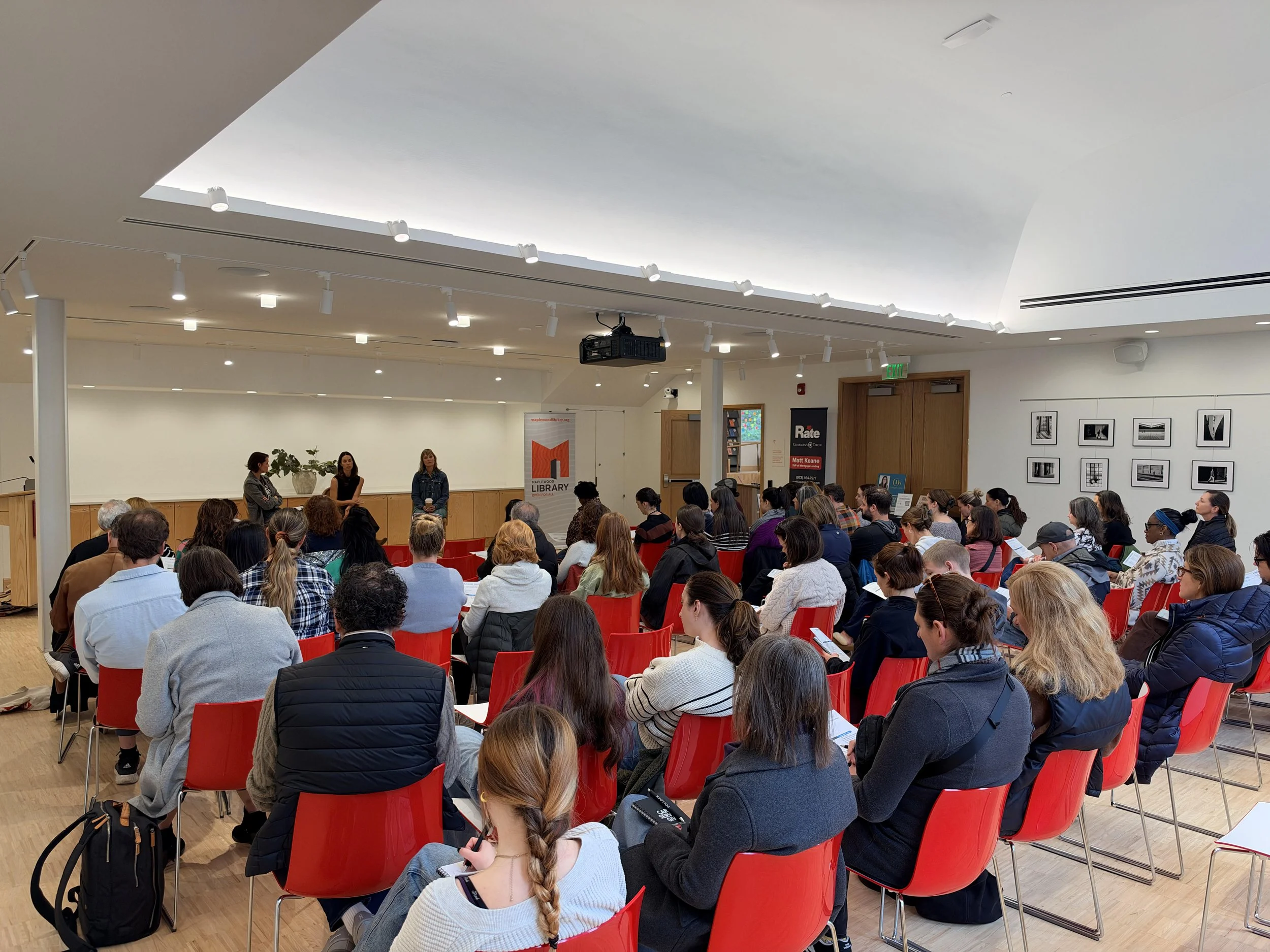
Here are the lessons, insights, and conversations I hope every parent and student can take away from our morning together.
1. The College Timeline Starts Earlier Than You Think
One of my biggest realizations over the last few years was that freshman year matters.
I genuinely didn’t understand that when my older children started high school. I didn’t know how much those early grades could influence the college application process, or how important it was to begin thinking about the trajectory of coursework.
Christina reminded us that while colleges typically see final semester or year-end grades rather than individual quarterly grades, freshman-year performance absolutely counts.
“There’s a rumor out there that freshman year grades don’t matter,” she explained. “But freshman year grades matter.”
She also acknowledged that freshman year is a difficult transition for many students. They’re young, they’re adjusting to a new academic environment, and they may not yet have developed the organizational skills or study habits they’ll eventually need.
That doesn’t mean we should put enormous pressure on ninth graders. It means we should understand the process and help them build a foundation.
Christina encouraged families to think about several things developing gradually through the fist 2-3 years of high school:
Academic coursework: Choosing classes that provide an appropriate level of challenge while supporting the student’s interests and abilities.
Testing: Understanding whether the SAT or ACT makes sense, and when a student will have learned enough material to prepare effectively.
College research: Gradually discovering which schools might be a good academic, social, and financial fit.
Teacher relationships: Building meaningful connections with teachers, particularly during junior year, when students will often request recommendation letters.
Activities and interests: Giving students time to discover what they love and develop meaningful involvement outside the classroom.
Christina described much of this work as a “slow burn,” and I love that framing.
The goal isn’t to have everything figured out at 14 or 15. It’s to be intentional as students grow, learn, and discover who they are.
Understanding the Application Deadlines
Christina also helped demystify the different application timelines.
Early Action generally allows students to apply earlier without committing to attend. Many deadlines fall around October 15 or November 1, although dates vary by institution.
Early Decision is a binding commitment, subject to the applicable agreement and its exceptions. Christina compared it to making an offer on a house: if the college accepts, the student is expected to attend.
Restrictive Early Action is generally nonbinding but limits certain other early applications, depending on the college’s rules.
Rolling Admissions means colleges review applications as they arrive, often making it possible for students to receive decisions earlier in the process.
Regular Decision deadlines frequently fall in early January, although every college establishes its own schedule.
Christina shared one of my favorite pieces of advice from the morning (at least for me this year!):
“We don’t believe in winter holiday emergencies.”
Her team aims to have students finish applications by mid-December so that families can enjoy their holiday break without the stress of looming January deadlines.
Note to self!

2. Visit Colleges When College Students Are Actually There
This might be my favorite piece of advice from our three years of College Countdown and something that we implemented.
When we started visiting colleges with Sloane, we intentionally explored small schools, medium-sized schools, and large universities. I wanted her to experience the different environments and begin understanding what felt right. And what we learned was fascinating.
We would arrive on a campus, walk around during a class change, and within ten minutes she would be looking at the students around her. Sometimes she’d say, “Mom, these aren’t my people.” And I’d say, “Okay. Want to leave and get a snack?”
Because we’d accomplished what we came to do.
Other times, she’d walk onto campus and say, “This is my vibe. This is totally my jam.”
And suddenly that school was on the list.
It’s one thing to read about a college, study its rankings, or scroll through beautiful photographs on its website. It’s another thing entirely to walk through the campus while students are going about their everyday lives and imagine yourself becoming part of that community.
Stephanie shared a similar experience with her daughter, who had fallen in love with a school during an earlier visit. When they returned a year later, her daughter looked at the same bustling campus with a completely different perspective.
“Hmm. Kid City. I think I need a Kid Village.”
She had begun thinking not just about how exciting the school seemed, but about whether she could actually study, find quiet spaces, and thrive there.
That’s growth. And it’s exactly what the process should allow.
When should you start visiting?
Christina suggested that sophomore year can be a good time to casually explore a campus or two if your child is interested, but there’s no need to force it. Junior year is generally when visits become more purposeful. She encouraged families to plan ahead, take advantage of school breaks, and even coordinate trips with friends.
But she also reminded us that college visits can be expensive, time-consuming, and overwhelming. You don’t have to visit every school.
Virtual tours, online information sessions, interviews, and admitted-student events can all help families make informed decisions without traveling across the country.
And sometimes the right moment to visit is simply when your child is ready.


3. SAT or ACT? Test Optional? Here’s What Families Need to Understand.
Testing was one of the biggest topics of the morning, and for good reason.
The rules have changed considerably since most of us applied to college.
Christina explained that although test-optional admissions existed long before COVID, the pandemic dramatically expanded the number of colleges offering that option.
Some institutions have since returned to requiring standardized tests, while many others continue to allow students to apply without them.
Her advice was refreshingly practical.
For students who are strong academically but struggle with standardized testing because of anxiety, attention challenges, or other circumstances, applying test optional may be an excellent strategy.
But for students who can achieve scores at or above the range typically seen at their target schools, submitting strong scores can be beneficial.
The key is to evaluate the individual student rather than assume that everyone should follow the same testing plan.
How do you choose between the SAT and ACT?
Christina recommended beginning with diagnostic or practice tests for both. We did this based on her advice years ago. The SAT and ACT are equally respected by colleges, but they have different formats and pacing.
The SAT is fully digital, while the ACT offers paper and digital options. The ACT has historically been more time-sensitive, although its format has evolved.
Students should try both, assess which one better suits their strengths, and then focus their preparation on that one test. Your student only submits ONE. Christina’s advice was to avoid repeatedly switching between the two.
And don’t rush into testing before students have learned the necessary material. Students often see a grade improvement just because they’ve had more time in high school learning. For example, a student who is still taking Algebra II may benefit from waiting until later in junior year to begin formal testing.
How much preparation is enough?
During the Q&A, a student asked how to know when someone is ready to take the actual exam.
Christina explained that three or four months of preparation is common, although some students need considerably more time. She recommended taking free timed practice exams in a quiet, realistic testing environment.
“Go to the library. Go to the library. Go to the library.” Not your bedroom, surrounded by snacks, distractions, and the dog!
Once students begin consistently achieving their target scores on practice tests, they’re generally in a better position to schedule the official exam.
Many colleges also allow superscoring, which combines a student’s strongest eligible section scores from different test dates, although policies vary.
Sloane ultimately took the ACT four times as she worked toward her goal score. And I’ll never forget the morning her calculator battery died before the exam. She texted Christina in a panic, and she left a calculator on her front stoop for us to pick up.
That’s the kind of college coaching I didn’t even know I needed!
More importantly, the experience taught us that testing is a process, and students often improve not just because they’ve practiced, but because they’ve continued learning in school.
A note for families: Testing requirements, ACT and SAT formats, and superscoring policies continue to change. Always verify the current requirements for each college on your student’s list.

4. Not Every College Is Impossible to Get Into
If you spend enough time on social media, you might begin to believe that no one gets accepted to college anymore. Christina wanted to challenge that narrative.
She described what she calls a “K-shaped curve” in college admissions.
At one end are the extremely selective universities, where acceptance rates remain extraordinarily low and competition is intense. At the other end are hundreds of excellent accredited colleges and universities that are more accessible and actively seeking students.
The problem, she explained, is that families often focus so heavily on the most selective institutions that they lose sight of the enormous range of opportunities available.
“There are a lot of good solutions out there to the challenge of getting into college.”
Her recommendation is to build a thoughtful college list that includes schools where admission is more likely, schools that are realistic matches, and schools that are ambitious reaches. And the schools with higher acceptance rates aren’t lesser schools. They may offer wonderful academics, supportive communities, strong career pathways, and opportunities that are exactly right for a particular student. I shared that having a balanced list has given our family tremendous peace of mind. We can celebrate the possibilities rather than feel as though everything depends on one admissions decision.
Christina also encouraged families to think about three important questions when building a college list:
Can we afford this school? Is my child interested in this school? And is this school likely to be interested in my child?
That third question can be especially difficult to understand.
Some colleges rely heavily on grades and test scores. Others take a more holistic approach, considering essays, activities, recommendations, personal experiences, and the kind of community they are trying to build.
For our local families, I also shared a resource available through Columbia High School. The school uses a college-planning platform called Scoir, which includes scattergrams showing historical admissions outcomes for students from the same high school. Families can compare GPA and standardized test scores with previous applicants’ outcomes to better understand which colleges may be realistic options. These aren’t guarantees of admission, but they can be helpful data points.
And sometimes a little reliable data is exactly what we need to quiet the noise.
5. Stop Building a College Application. Start Building a Human.
This was one of the most important themes of the entire event.
Stephanie talked about how students should spend their high school years developing interests that genuinely matter to them, rather than chasing activities simply because they might look impressive on an application. She shared the story of her daughter, who is interested in nursing and has always been drawn to helping people. As a sophomore, she began volunteering with an emergency services organization. She eventually became certified as an EMT.
That experience certainly supports her college applications, but Stephanie emphasized that her daughter didn’t pursue it to impress an admissions officer. She pursued it because it’s who she is.
“If they have interests, expand those interests, develop those interests.”
That advice applies to so many different students. A musician might perform, compose, or teach younger children. An athlete might coach, volunteer, or explore interests completely unrelated to sports. A student who loves engineering might join a club, build something independently, or find opportunities to collaborate with others.
And a student who doesn’t have a long list of extracurricular activities by sophomore year?
That’s okay, too.
Stephanie shared that some students are naturally driven to participate in lots of activities, while others need a little encouragement to explore. She described encouraging her own son, an athlete interested in engineering, to commit to an ongoing service project and get involved in an engineering club. He eventually became the head of that club.
“Who knew?”
The goal wasn’t to manufacture a different personality. It was to encourage him to explore interests he already had.
Jobs and Family Responsibilities Count, Too
One of the most helpful reminders was that meaningful activities don’t have to come with impressive titles.
Colleges value students who work. A part-time job demonstrates responsibility, time management, accountability, and the ability to interact with people outside the classroom. Helping at home can matter, too. Students who regularly care for siblings, support family members, or take on significant household responsibilities are contributing in meaningful ways.
Those experiences can belong on an activities list.
The bigger message was that students should not be spending four years trying to create a fictional version of themselves. They should be discovering and developing their real selves.
And that brings me to one of my favorite phrases from the conversations afterward:
Focus on the gain, not the gap.
Instead of worrying about every activity your child isn’t doing, look at what they already enjoy, what they’re good at, and what gives them energy.
Then help them go deeper.

6. Your Child’s Essay Should Sound Like Your Child
Stephanie and Christina were especially passionate about authenticity in college essays. And in the age of artificial intelligence, that conversation feels more important than ever.
Christina put it beautifully: “We’re not bragging. We’re storytelling.”
Colleges already have access to students’ grades, coursework, activities, and test scores when submitted. The essays are an opportunity to learn something about the human being behind that information.
Stephanie explained how meaningful it is to work with students, earn their trust, learn their stories, and help them express themselves in their own voices.
Christina cautioned parents against overediting essays or using AI to rewrite them.
“We want their texture to come through. We want their souls to come through.”
She described seeing essays that suddenly sounded nothing like the student she’d been working with, filled with polished language and phrases lifted from college websites. That kind of writing can undermine the very purpose of the essay.
The goal is not to sound like a professional adult. The goal is to sound like a thoughtful, interesting, authentic teenager. And as parents, we need to resist the temptation to take over. We can support them, encourage them, and help them think.
But the story belongs to them.
7. Keep Your Eyes on Your Own Paper
Of all the advice shared during the event, this may be the one I hope students remember most.
Stephanie said: “Keep your eyes on your own paper.”
It’s such a simple phrase, but it speaks to an enormous amount of pressure our children experience. They compare grades. They compare test scores. They compare extracurricular activities, leadership positions, college lists, and eventually acceptances.
And social media amplifies all of it.
Stephanie shared that her family has a policy of not discussing grades with friends. Not because grades are unimportant, but because they’re personal, and comparing them can create unnecessary competition. She encouraged parents to focus on the actual child they’re raising rather than an imaginary student who could get accepted everywhere.
“We want them to get into the schools that are going to help them become the humans that they aspire to be.”
I think about this a lot with our students at Columbia High School.
We have a wonderful community filled with ambitious, talented young people. But we also have social media accounts celebrating college commitments, and I know how much pressure those announcements can create.
They’re not choosing a college for an Instagram post. We’re choosing a place where she will spend four years of her life, build relationships, learn, grow, and prepare for whatever comes next. That’s what matters. Someone else’s acceptance has absolutely nothing to do with the value of your child’s path.
8. Parents: Please Stop Talking About College All the Time
This one made me laugh because I think every parent in the room recognized themselves.
Stephanie shared that even as a professional college coach, she’s found herself overwhelming her own daughter with college conversations. Her daughter finally reached the point of saying she simply didn’t want to talk about it anymore.
So Stephanie offered a very practical strategy.
Schedule one college meeting each week, for no more than 90 minutes.
Throughout the week, when questions or concerns come up, put them in your notes app. Then discuss them during the scheduled meeting. That way, college admissions doesn’t become the subject of every car ride, every dinner, and every moment your child walks into the kitchen.
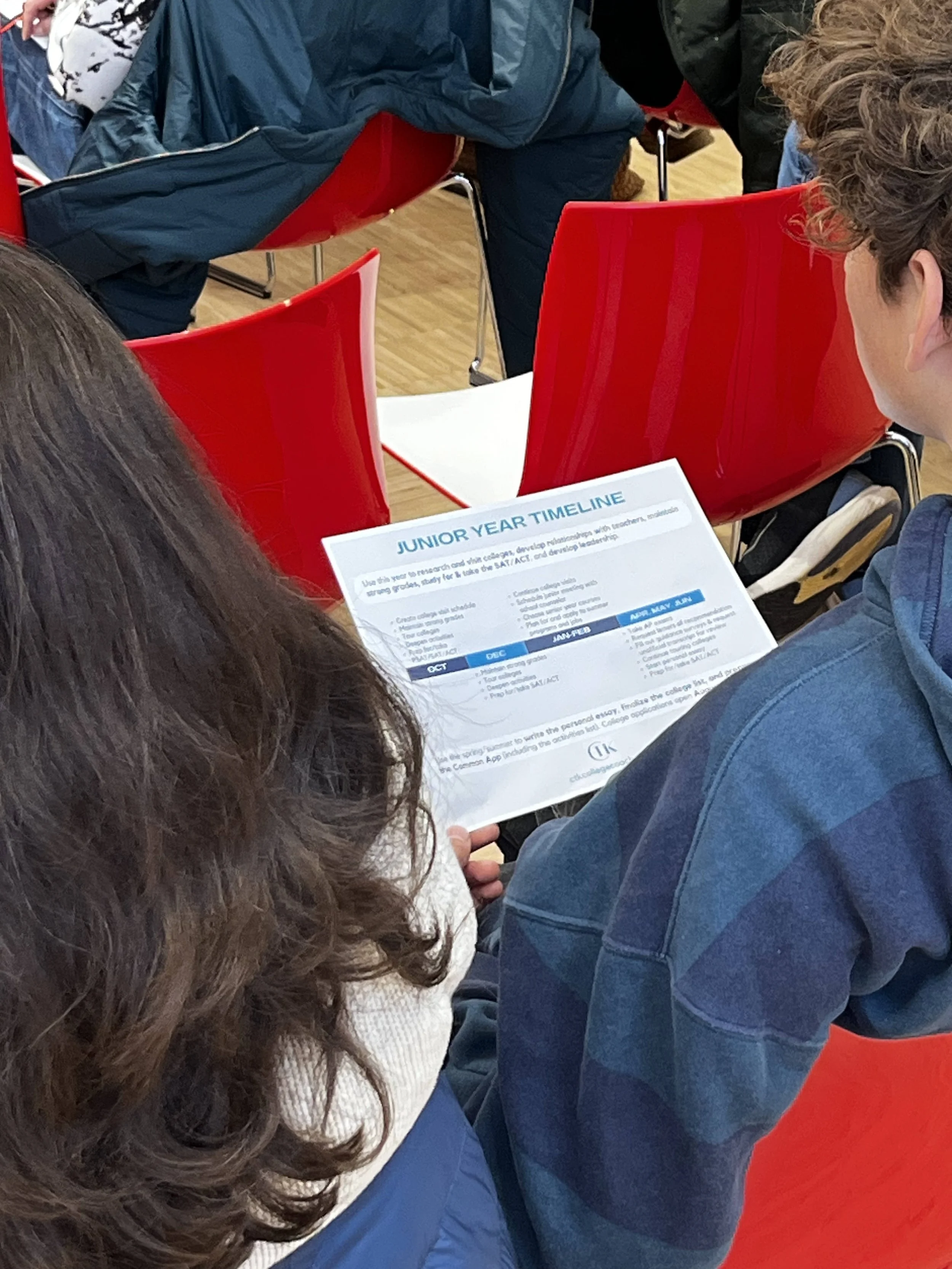
As Stephanie explained, the goal is to keep parents from transferring their own anxiety onto their children.
I shared that we have a rule in our house: we don’t talk about college at family dinner. Because while we’re busy thinking about their futures, our children are still living their present.
They’re in high school. They have friendships, sports, music, activities, relationships, and all the experiences that make these years so special.
We need to allow them to enjoy those years, too.
My Three Pieces of Advice for Parents
After navigating this process with my daughter, and learning from these experts over the last several years, I shared three things I wish I’d understood sooner.
First, let your child lead the way, and keep your opinion to yourself.
This is harder than it sounds. When we visited colleges, I often found myself wanting to share what I thought about a campus. And then I’d realize that my opinion really wasn’t the important one.
I needed my daughter to figure out what she thought.
If she asked for my perspective, I was happy to share it. Otherwise, I tried to listen.
Second, stay flexible as they change their minds.
They’re learning. A school they love in sophomore year might feel completely different by senior year. An academic interest might evolve. Their priorities might change as they begin to understand themselves better.
That’s not indecision. That’s growth.
Third, visit campuses while school is in session.
Let them see the students. Let them experience the energy. Let them discover whether they can imagine themselves there.
Our children have grown up in Maplewood and South Orange, a community I believe is one of the most special places in America. And one of the unexpected gifts of college visits has been hearing my daughters recognize what they love about growing up here.
They notice the differences. They appreciate the diversity, the community, and the relationships they’ve known. And those observations help them understand what kind of environment they might want next.
9. Questions From the Audience
We finished with questions from parents and students, many of which touched on concerns families had submitted before the event.
Here are several of the most helpful takeaways.
How important are honors and AP classes?
Christina explained that colleges care about academic performance and, depending on the institution, the rigor of a student’s coursework. But the right balance matters.
Putting a student into numerous advanced courses where they’re likely to struggle isn’t necessarily a better strategy than choosing appropriately challenging classes where they can succeed. The goal is a thoughtful academic trajectory, not simply collecting the greatest number of AP classes.
Should extracurricular activities all connect to one interest?

Not necessarily. Stephanie explained that some students are very focused on one particular area, while others have a broader range of interests. A student who plays soccer might volunteer as a coach, but might also love animals and volunteer at a shelter.
Both experiences tell a story. The important thing is that the activities reflect genuine interests and meaningful commitments.
Do students need to demonstrate interest in colleges?
It depends on the school.
Some smaller colleges, particularly those using holistic admissions, may place greater emphasis on whether a student has engaged with the institution. That could include attending information sessions, participating in interviews, communicating with admissions representatives, or visiting campus.
Stephanie also made a point about etiquette. When an admissions representative or student ambassador reaches out personally, students should respond thoughtfully.
And they need to check their email! For many teenagers, email is hardly part of their daily routine, but it becomes essential during college admissions.
How should students choose teachers for recommendation letters?
Christina explained that most students will request recommendations from two core academic teachers, often from junior year.
The most important consideration is usually choosing teachers who know the student well and can speak meaningfully about their work, character, and growth.
Some colleges have specific requirements about subjects or disciplines, so students should check those carefully.
What about students who don’t know what they want to study?
One of the conversations that continued after the formal event was about students who haven’t yet discovered their academic interests or extracurricular passions.
And my response was simple. Give them time.
I’ve watched my own children develop interests at completely different moments. Sloane didn’t really begin finding her leadership interests until later in sophomore year and into junior year.
And then things started to click.
Some students know exactly what they want at 14. Others discover it at 17. Others arrive at college undeclared and figure it out there. All of those paths are valid.
10. The Most Important Thing We’re Preparing Them For Isn’t College
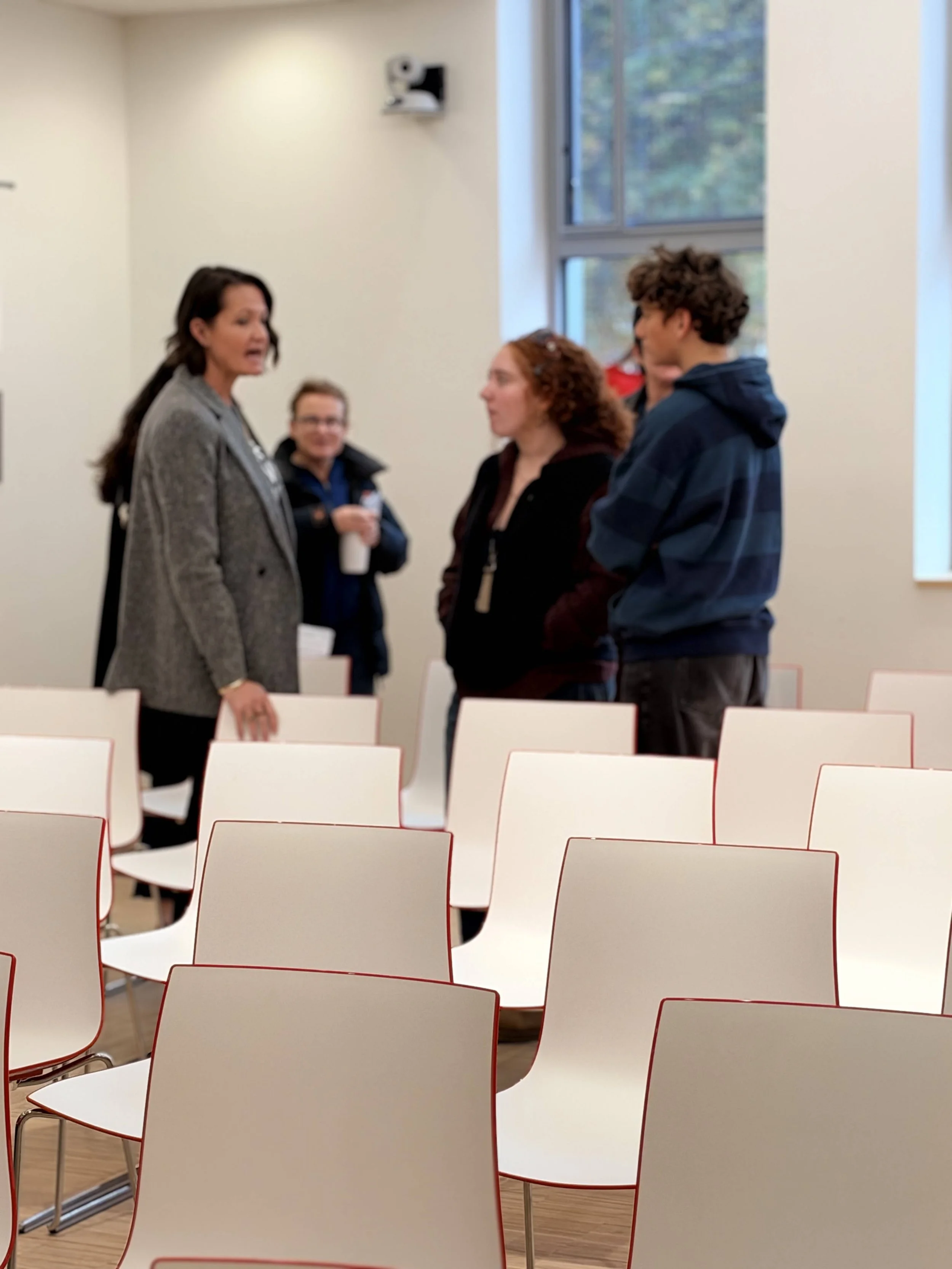
After the event ended, I stayed and talked with several parents and students.
One student shared that her biggest takeaway was to look at the activities she’s already doing and think about how she could go deeper into the things that genuinely interest her.
I loved that. Because it wasn’t about adding more to her schedule. It was about understanding herself better.
And that’s what I hope we all take away from College Countdown.
Of course, we want our children to have opportunities. We want them to work hard, develop good habits, challenge themselves, and find colleges where they can thrive. But somewhere in all the testing, applications, campus tours, essays, and deadlines, we have to remember what we’re actually doing.
We’re raising human beings.
Human beings who need to know how to make decisions, how to advocate for themselves, how to explore their interests, how to handle disappointment, and how to build lives that feel meaningful to them.
College may be an important part of that journey. But it isn’t the destination. And it certainly isn’t the measure of their worth.
So to every parent navigating this process, I hope you’ll give yourself permission to learn as you go, to make mistakes, to ask questions, and to trust your child a little more along the way.
And to every student, I hope you’ll remember Stephanie’s words:
“Keep your eyes on your own paper.”
Your future doesn’t need to look like anyone else’s. It just needs to be yours.

With Gratitude
A huge thank-you to Christina Tabor-Kelany and Stephanie Nassar-Polato of CTK College Coach for sharing their expertise, their experiences as parents, and their genuine commitment to helping young people find the right path.
Thank you to Matt Keane of Rate Mortgage, whose generous sponsorship helped make College Countdown a free community event. Matt is not only a valued partner to our team but also a dedicated volunteer firefighter who gives so much of his time in service to others.
And thank you to every parent and student who joined us, submitted questions, and contributed to such a thoughtful morning.
We also invited attendees to support the Pollock Arts Initiative, which helps provide music and arts opportunities for students in our school district, and to learn more about organizations expanding college access for under-resourced students.
At Pollock Properties Group, we believe that sharing what we know is one of the simplest and most meaningful ways to give back.
Care. Serve. Give.
That’s why we gather, why we share, and why we’ll keep bringing College Countdown to our community.
Until next year! - Vanessa